Questions answered by the small print
Twelve frequently asked questions, grouped by when they occur to people. No answer here is a general observation about forwarding; every one of them is the operator's own published position, and the page it came from is linked beside it.
Search products
On this page
Read 2026-09-03. Notices are edited without announcement, so check the live page when an answer is about to cost you something.
Twelve answers
Before you order
The cheapest questions to ask, because the answers are still free to act on.
Does the catalogue sell me anything?
No. A catalogue is a browsing surface: categories, product cards, and a page per item carrying the source seller's own photographs. The purchase itself is placed on the source platform, by the agent, on your instruction. What a listing commits to is a separate question with a published answer.
Does anybody check whether an item is genuine?
No, and the operator says so rather than leaving you to find out. The notice covering receipt states that material and category are verified and that authenticity is not, and it puts the consequence of a customs seizure on the customer. That single paragraph is the reason this site exists.
Can I ask for the original shop packaging to be kept?
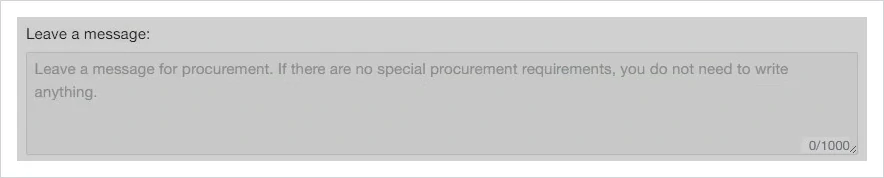
Ask before the purchase is placed, in the message field attached to the request, because the default runs the other way: the instruction says the original courier box is removed and the goods are repacked into the operator's own sealing bags, with fragile and oversized items keeping their boxes. Whether a particular request can be honoured is theirs to answer, not this site's.
What is actually included in the price?
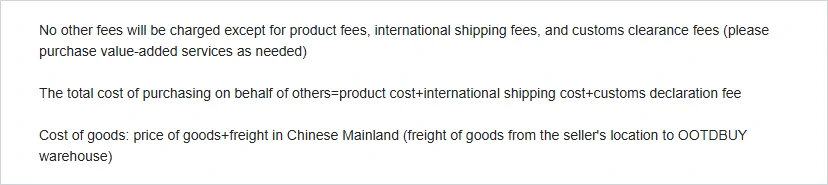
The fees notice draws the boundary in its first line: product fees, international shipping and customs clearance, with optional services bought deliberately. It then defines the cost of goods as the item price plus the domestic freight to the warehouse, which is the part that surprises people. Read the boundary rather than the amounts.
Source excerpt · dated capture
The question behind the storage question
People ask how long an item can sit in the warehouse and expect a number. The number is the least interesting part of the answer.
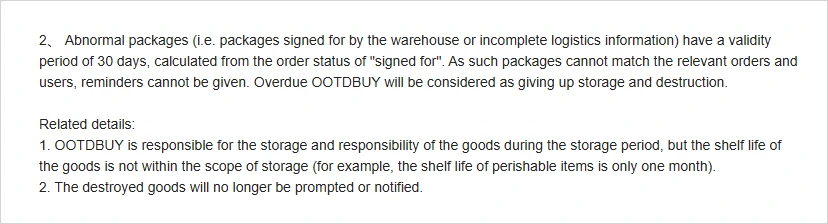
What matters is the second category the notice defines. A package the warehouse signed for but could not match to an order or a user is abnormal, gets a much shorter validity period, and the notice states outright that reminders cannot be given for it, because nobody knows whose it is. The related details add that destroyed goods will no longer be prompted or notified.
So the real answer to how long an item can sit there is: long enough, provided it is attached to your account. Check that it is, early, while the item still exists.
Source excerpt · dated capture
After it reaches the warehouse
The middle stretch, where most of the misunderstandings on this site begin.
What does the warehouse actually look at?
Quantity, colour, size and other specifications, checked against what was ordered, followed by repacking and storage. That is a comparison against a line of text, not an opinion about quality, and the notes underneath say so explicitly.
So what is excluded?
Three things by name: colour difference, size error and usage effect. Then electrical goods, digital products and peripherals, whose quality, model and spare parts are outside the scope. Then sealed categories, where the packaging is not opened at all and only the outside is checked for damage.
Are the inspection photographs a verdict?
They are a record, taken within that scope. Treat them as evidence you now have to read yourself, while the clock attached to the Stored status is running. The forum words for approving or rejecting them are not words the notices use.
How long can an item sit in the warehouse?
Inside a validity period that ends in destruction. Normal packages get the long one; packages the warehouse could not match to an order get a much shorter one, and the notice states in advance that reminders cannot be given for those.
Source excerpt · dated capture

Source excerpt · dated capture
Why the price question keeps coming back
The fee boundary is published clearly and still generates more confusion than any other part of the process, for one structural reason: two of the three components are unknowable at the moment you decide to order.
The goods cost is fixed when the purchase is made, and it quietly includes the domestic leg to the warehouse. The international freight is a deposit against a carrier measurement that has not happened yet. The customs declaration depends on the method chosen at submission, which is a decision taken days later.
That is why this site publishes no amounts. Not caution, just arithmetic: any figure written here would be a guess about somebody else's parcel. The mechanism is explained; the numbers live on the operator pages and should be read there on the day.
Deadlines
When something has gone wrong
Every answer below is a deadline in disguise. The first hour after delivery decides most of them.
The parcel arrived damaged. What do I do first?
Before signing: inspect the outer packing and the seal, notice whether the weight is obviously different, and if there is a clearly broken or damaged mark, check the parcel in front of the postman and either sign with remarks or refuse it. That is the strongest position available to you and it lasts about a minute.
I already signed, and then found the damage.
Keep the original packaging sealed, and get the invoice, actual photos and other related evidence to customer service within two working days of delivery. The notice says the operator will then negotiate with the local post office about compensation.
How long do I have for anything else?
Seventy-two hours after signing for general problems, with the notice stating it is not able to deal with a case after that. For an insurance claim the outer walls are seven days after signing or forty-five days after shipping. All the deadlines are on one screen.
Customs seized my parcel. Who carries that?
You do, and it is written down twice. The receiving notice assigns the loss to the customer where contents are judged counterfeit or sensitive. The insurance disclaimer separately excludes items violating the prohibition or restriction for delivery and anything confiscated by the competent authority.
Source excerpt · dated capture
The return question the notice does not settle
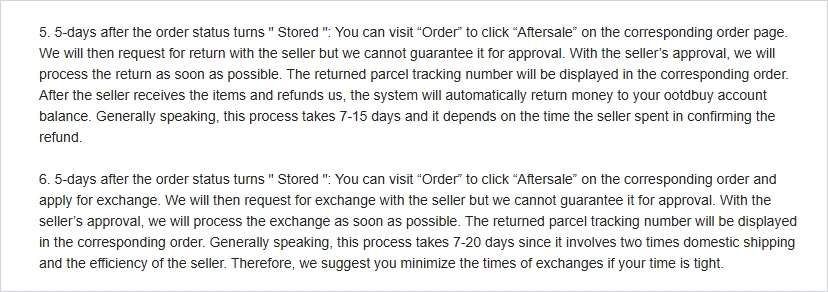
Two paragraphs of the aftersale notice cover returns and exchanges, and they are near enough identical: a request goes to the seller, approval cannot be guaranteed, the returned parcel gets its own tracking number, and money comes back to the account balance once the seller confirms. The exchange route runs longer, and the notice suggests minimising exchanges if your time is tight.
Both paragraphs open with the same construction about five days and the Stored status, and on their own neither says which direction that clock runs. The returns notice settles it from the other side of the site, and it is unusually precise about it: the request must be made within five days of stock-in, the count starts at the next hour after the status changes, and the notice spells out that five days means one hundred and twenty hours. So the window opens when the status changes and closes five days later, and the request might not be accepted after that.
The rest of the aftersale ladder, and what it tells you about who holds the remedy at each stage, is read in full on the claims page.
Source excerpt · dated capture
When to stop reading and ask a person
This site is a reading of published documents. It is not the operator, it cannot see your order, and it has no ability to change any outcome. Three kinds of question should go straight to the operator rather than to any guide, including this one: anything about a specific order, anything where an amount matters, and anything where a deadline is about to expire.
Customer support is reachable from the account and from the help section of the operator site, and the notices repeatedly point at it. When you write, give the order number first, the photographs second and the explanation last, because that is the order somebody working a queue reads in.
If you think a clause quoted on this page has changed, or has been read wrongly here, write to the address in the footer. Corrections get published on the updates page with the date attached.
Source excerpt · dated capture